Why we built Scaleport
We spent decades on every side of this industry. Selling inspection robotics into refineries. Managing maintenance budgets for world-scale chemical plants. Moving high-value equipment across borders into restricted jurisdictions.
That means we know how technology adoption actually works inside an oil and gas corporation. We know the difference between landing a meeting with an innovation department and getting written into a five-year service contract at an operating site. We know how long procurement cycles run, who owns the budget, and why a pilot that impresses the VP of Innovation never makes it to the maintenance team. We know what ATEX compliance means in practice, what a turnaround schedule costs when it slips, and what plant managers need to hear before they let unfamiliar equipment through the gate.
We also know what it costs to build a local presence by yourself. The office lease, the local hire, the equipment storage, the customs infrastructure, the insurance stack. For a Series A company, that is an existential bet on a single market. Most do not make it. So the technology stays in Zurich and Boston and Munich, the asset owner extends the contract for the 30-year-old method, and everyone waits.
We named that gap the Proximity Gap. Scaleport exists to close it.
Our Vision
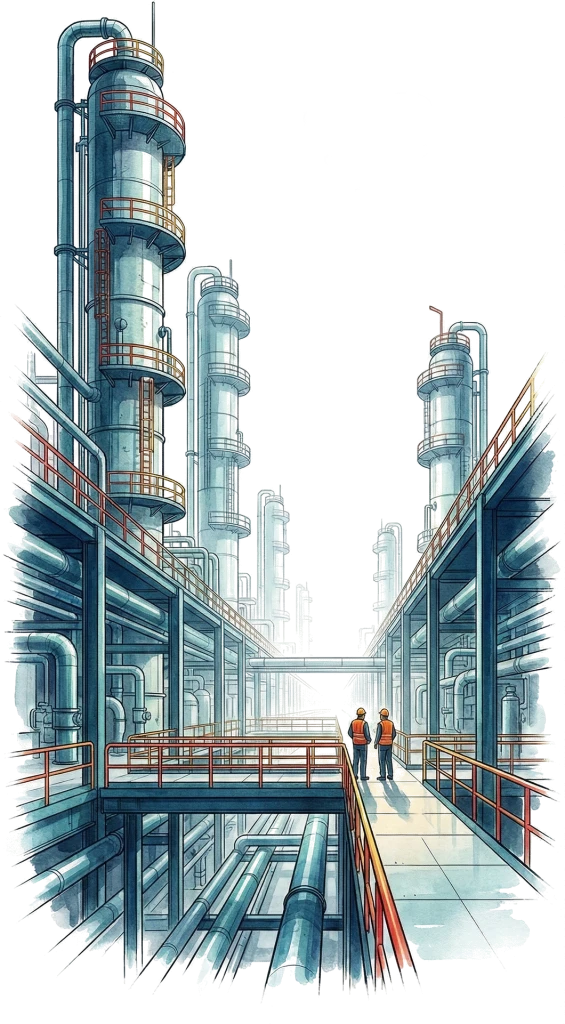
A global network of industrial-grade hubs positioned inside the world’s most critical energy and petrochemical clusters. Houston, Rotterdam, Singapore, chosen because that is where procurement decisions get made, where service contracts get signed, and where technology has to prove itself before it scales anywhere else.
Every hub gives member companies what takes years and capital to build alone. A local address. Compliant storage and staging. Logistics infrastructure. A team that speaks the language of the sites they are selling into. And proximity to the buyers that matter.
For asset owners, a curated environment where vetted, deployment-ready technology is proven at hub level, not through scattered, one-off pilots for individual operators, but through a rigorous validation process that means a technology arriving at your site has already earned its place. Better outcomes on safety, cost, and timeline. Full transparency on how we evaluate, rank, and recommend what we carry.
The goal is an ecosystem where geography stops being the reason a good technology fails to reach the industry that needs it and where the best solutions win because the infrastructure to prove them finally exists.
company founders
The Team
More than 60 years of combined experience across industrial robotics commercialization, asset owner operations, and global market entry. The team has lived every version of the Proximity Gap — as the OEM trying to access refineries, the asset owner evaluating vendors, and the operator running the procurement cycle.
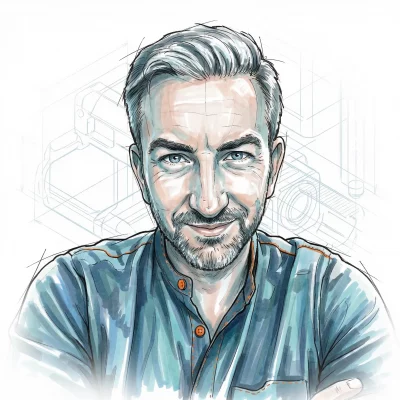
Viktor Klein
CEO & Co-Founder
ex Waygate Technologies / Baker Hughes | GE Inspection Robotics | Alstom
Built and scaled commercial robotics operations across Europe and the Americas. Defined product lifecycles and constructed global sales channel networks across three continents. Leads investor relations, member acquisition, and commercial strategy.

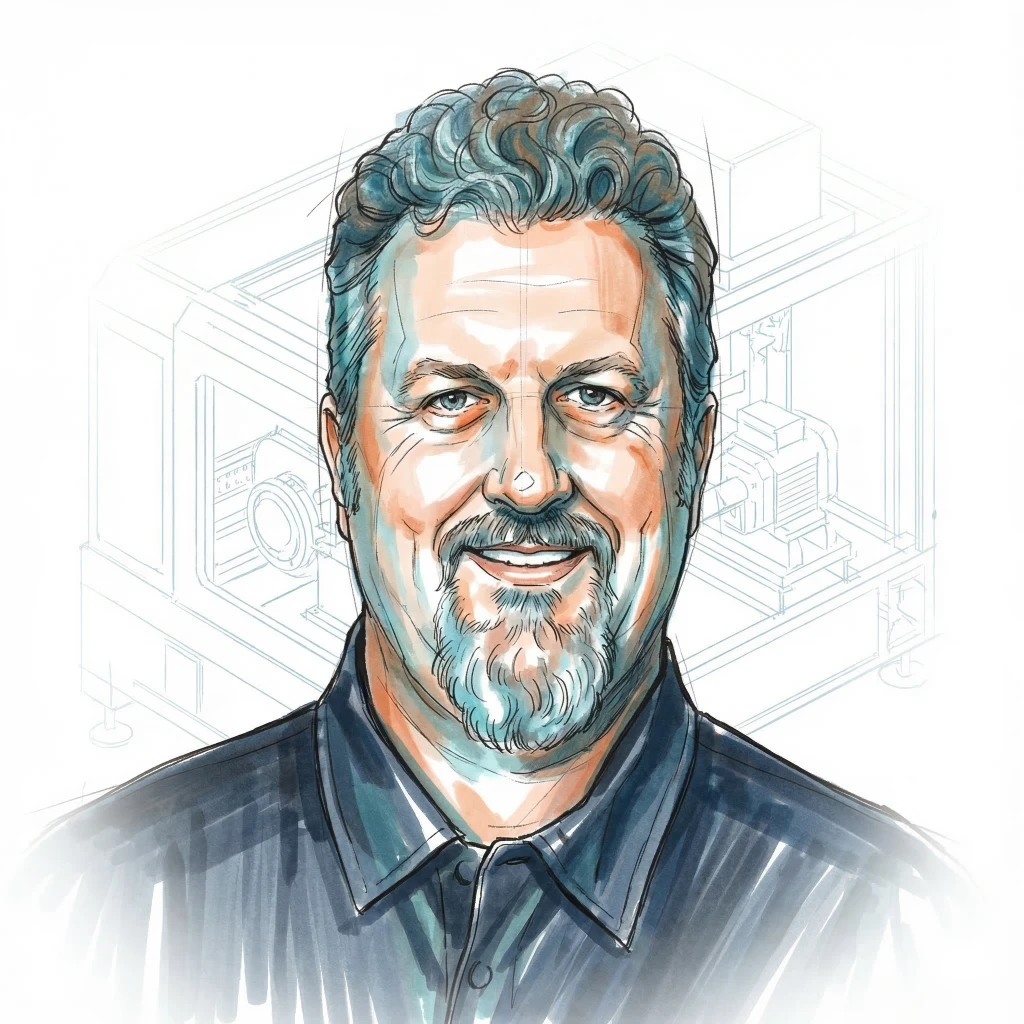
Marty Robinson
CTO & Co-Founder
ex Dow Chemical & Braskem | Senior Advisor, Energy Drone & Robotics Coalition (EDRC)
More than two decades as Global Technical Lead for Robotics at Dow and Braskem, deploying autonomous systems across some of the world’s largest petrochemical footprints. Senior Advisor to the EDRC. Leads technical validation, hub design, and member onboarding.
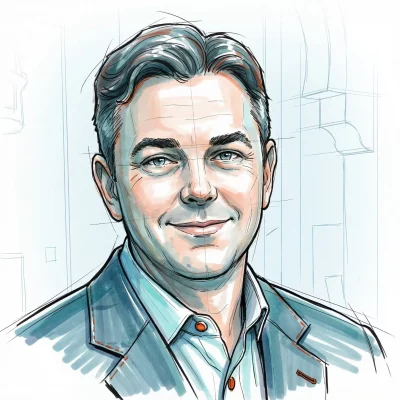
Andy Lewis
CFO & Co-Founder
Dow Chemical | Global Improvement Leader
Twenty years leading maintenance organizations across seven world-scale industrial facilities. Drove Dow’s Industry 4.0 including Robotics and IT/OT strategy. Leads financial strategy and ensures Scaleport’s operations align with the procurement cycles of the asset owners we serve.
FAQ
Your Questions Answered
Common questions we hear before every signup.
Who founded Scaleport?
Scaleport was founded by Viktor Klein, Marty Robinson, and Andy Lewis — three industry operators with more than 60 years of combined experience across industrial robotics commercialization, asset owner operations, and global market entry. Viktor Klein leads as CEO, with prior commercial leadership roles at Waygate Technologies, Baker Hughes, GE Inspection Robotics, and Alstom. Marty Robinson serves as CTO, with two decades as Global Technical Lead for Robotics at Dow Chemical and Braskem. Andy Lewis serves as CFO, with twenty years leading maintenance organizations across seven world-scale industrial facilities at Dow Chemical.
What does Scaleport do?
Scaleport operates a network of shared industrial-grade hubs that give robotics and drone companies the local presence required to sell into oil and gas, petrochemical, and heavy industry asset owners. Each hub provides a permanent industrial address, compliant equipment storage and staging, logistics and customs infrastructure, demo and exhibition space, and direct commercial access to the buyers who decide which technologies enter their facilities. Scaleport is the infrastructure layer that lets technology developers reach the asset owners who need their solutions, without the cost and time of building standalone local operations in every market.
Why was Scaleport built?
Scaleport was built to solve the Proximity Gap — the structural barrier that prevents commercially ready inspection robotics and drone companies from reaching the industrial customers who need their technology. Asset owners require local presence, compliance, logistics, and operational credibility before awarding contracts. Building that presence independently costs hundreds of thousands of dollars per year per market, putting it out of reach for most scaling companies. The result is that promising technology stays in the lab while asset owners extend contracts for decades-old methods. The founders watched this happen to dozens of companies from both sides of the table. Scaleport is the answer they wished existed when they were on either side of it.
What experience does the Scaleport team have in oil and gas and robotics?
The Scaleport founding team brings more than 60 years of combined experience inside the industrial sector. Viktor Klein scaled commercial robotics operations across Europe and the Americas at Waygate Technologies, Baker Hughes, GE Inspection Robotics, and Alstom — defining product lifecycles and constructing global sales channel networks across three continents. Marty Robinson spent over two decades as Global Technical Lead for Robotics at Dow Chemical and Braskem, deploying autonomous systems across some of the world’s largest petrochemical footprints. Andy Lewis spent twenty years leading maintenance organizations across seven world-scale industrial facilities at Dow Chemical, driving the company’s Industry 4.0 and IT/OT convergence strategy from inside a Fortune 500 operator. The team has lived every version of the Proximity Gap — as the OEM trying to access refineries, as the asset owner evaluating vendors, and as the operator running the procurement cycle.
Where is Scaleport's first hub?
The Scaleport flagship hub is located at Port 225, Building 6, 3009 Pasadena Freeway, Suite 170, Pasadena, TX 77503. The facility sits directly on Highway 225 at the Beltway 8 intersection, in the heart of the Pasadena Ship Channel industrial corridor. ExxonMobil Baytown, Shell Deer Park, Chevron Phillips Pasadena, LyondellBasell, and dozens of additional refinery and petrochemical operators are within a 20-minute drive. The hub is a 27,854 square foot industrial facility scheduled to open in Q4 2026.
Where does Scaleport operate?
Scaleport operates a network of industrial hubs positioned inside the world’s most critical energy and petrochemical clusters. The Houston flagship hub is the first location, opening in Q4 2026 in the Pasadena Ship Channel corridor. A European satellite operation in Singen, Germany, launches in parallel to serve Swiss and EU-based robotics companies. Additional hubs in Rotterdam, Singapore, and Dubai are on the roadmap. Each location is selected for proximity to the highest concentration of operating industrial assets in its region.
What makes the Scaleport founding team uniquely positioned?
The Scaleport founding team is uniquely positioned because each founder has operated on a different side of the Proximity Gap. Viktor Klein has spent his career scaling commercial robotics operations from the technology developer side, building global sales channels at Waygate, Baker Hughes, GE, and Alstom. Marty Robinson spent two decades inside Dow Chemical and Braskem as the asset owner deploying robotics technology across operating petrochemical facilities — the buyer in the procurement cycle that vendors cannot reach. Andy Lewis spent twenty years running maintenance for seven world-scale industrial facilities, holding direct responsibility for the reliability budgets and turnaround windows that determine when new technology actually gets adopted. Together, they cover the full sequence: how technology gets built, how it gets evaluated, and how it gets deployed inside an operating asset.
How do I contact Scaleport?
Scaleport has dedicated paths for every audience. Technology developers and robotics companies can apply for membership through the membership page. Asset owners, reliability engineers, and innovation teams can request access through the asset owner page. Investors and corporate venture funds can request the data room through the investor page. For press, partnership, and general inquiries, contact the Scaleport team directly through the contact form on the website.